
DB Explorer
Stored Procedures
Stored procedures are a vital tool for encapsulating reusable SQL logic. DBCode enhances your workflow with features like intuitive editors, conflict detection, and version comparison to ensure consistency and efficiency when managing stored procedures.
Creating a Stored Procedure
Section titled “Creating a Stored Procedure”-
Launch DBCode
- Open Visual Studio Code and navigate to the DBCode workspace.
-
Define the Procedure
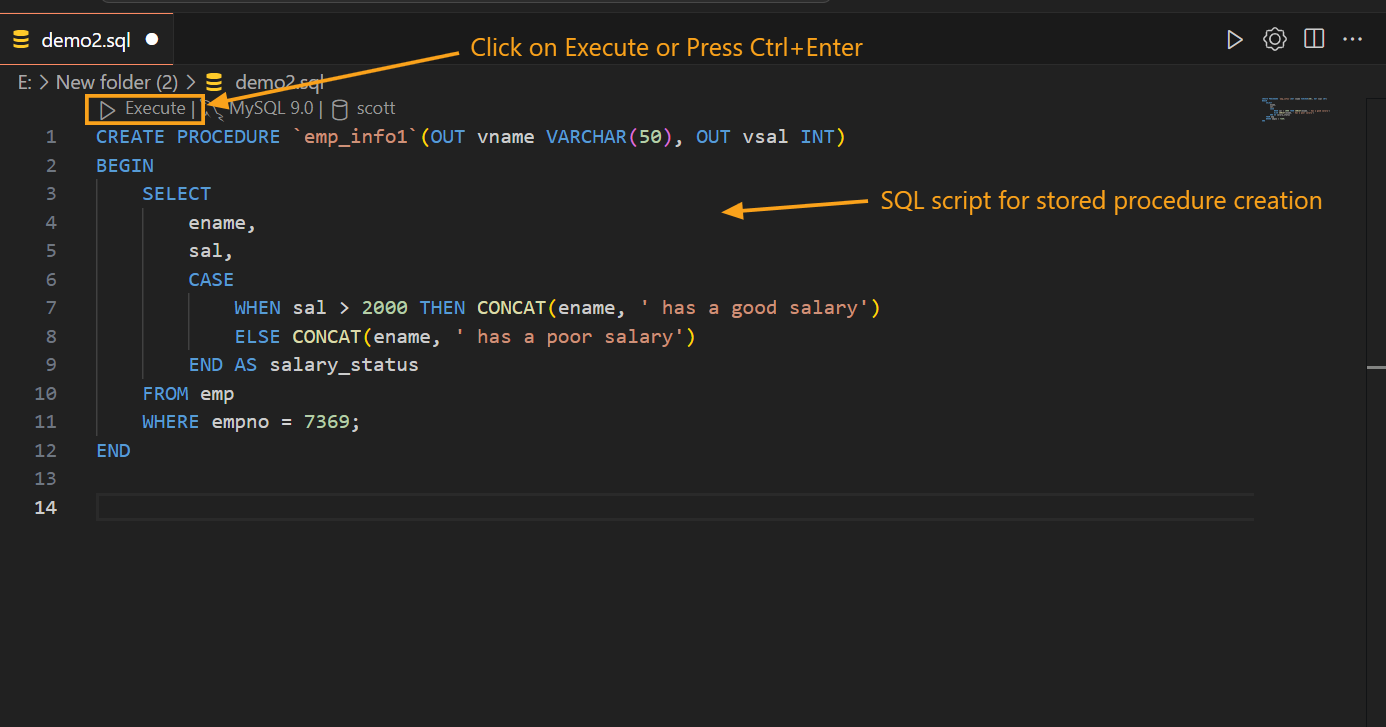
- Create a new
.sqlor DBCode notebook file, then write the SQL code for your stored procedure.
- Create a new
-
Execute the Script
- Save the file and execute it by clicking Execute or pressing Ctrl+Enter.
- A success message will appear in the DBCode terminal, confirming that the stored procedure has been successfully created.
Executing a Stored Procedure
Section titled “Executing a Stored Procedure”-
Script the Call
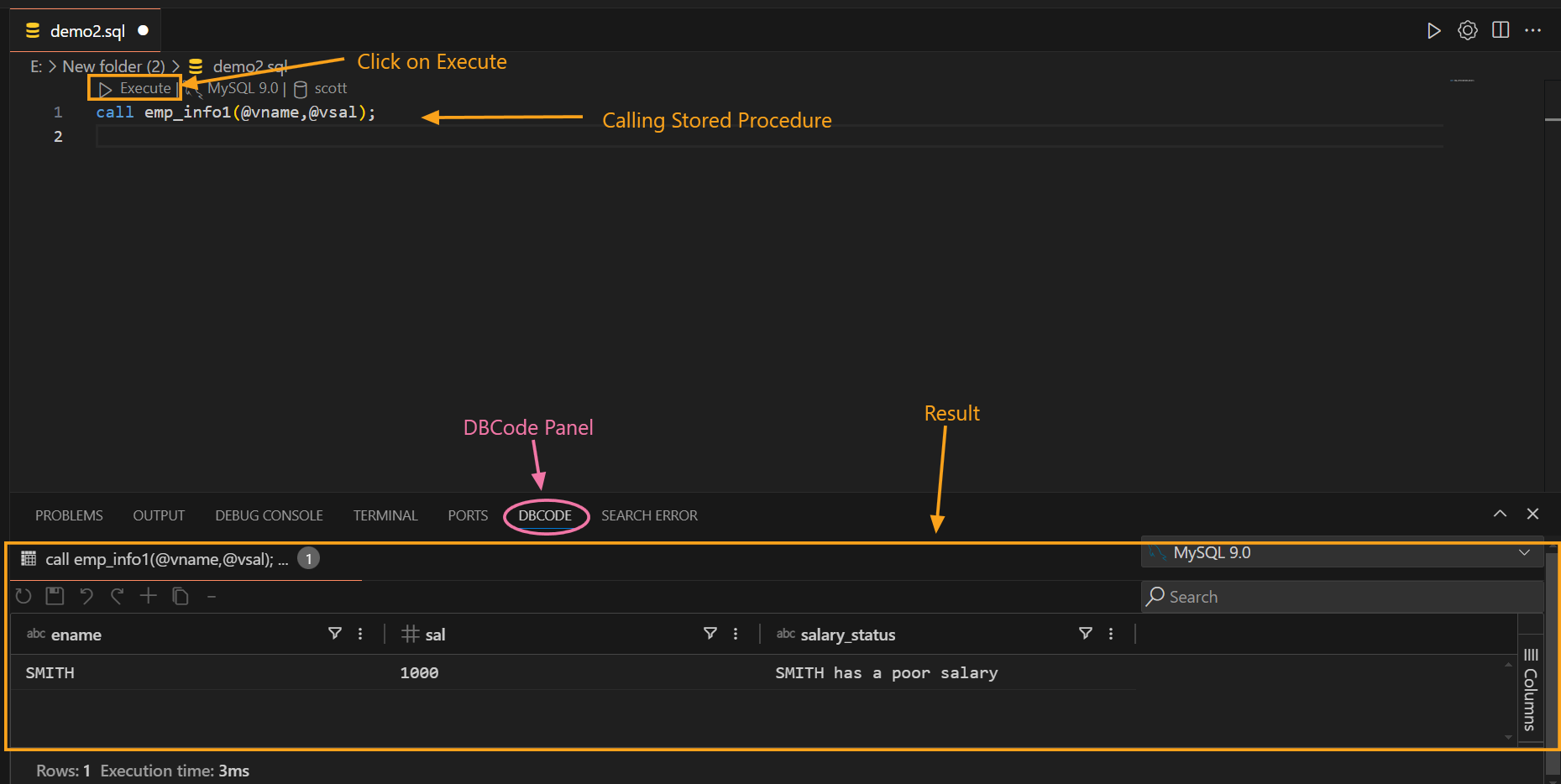
- Right-click a procedure or function in the DB Explorer and choose Script > EXECUTE. DBCode opens a SQL editor with a call that lists every argument.
- Each input argument is a query parameter, so running the script asks you for its value. Output arguments are read back after the call.
- Script > EXECUTE is available for PostgreSQL, MySQL, MariaDB, SQL Server and Oracle. On other databases, write the call yourself with
EXECorCALL.
-
View Results
- The output will be displayed in the Results Pane.
Modifying a Stored Procedure
Section titled “Modifying a Stored Procedure”-
Locate and Open the Procedure
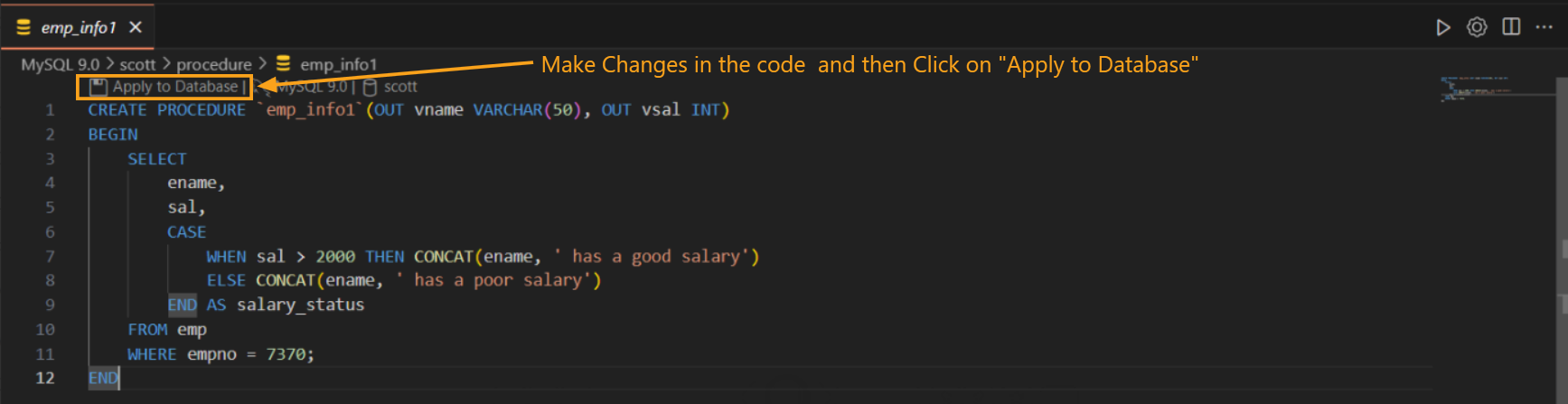
- Navigate to the DB Explorer and double-click the stored procedure to open it in the editor.
-
Edit the Code
- Make the necessary updates in the editor.
-
Apply Changes
- Click Apply to Database at the top of the editor to save changes.
-
Confirm Changes
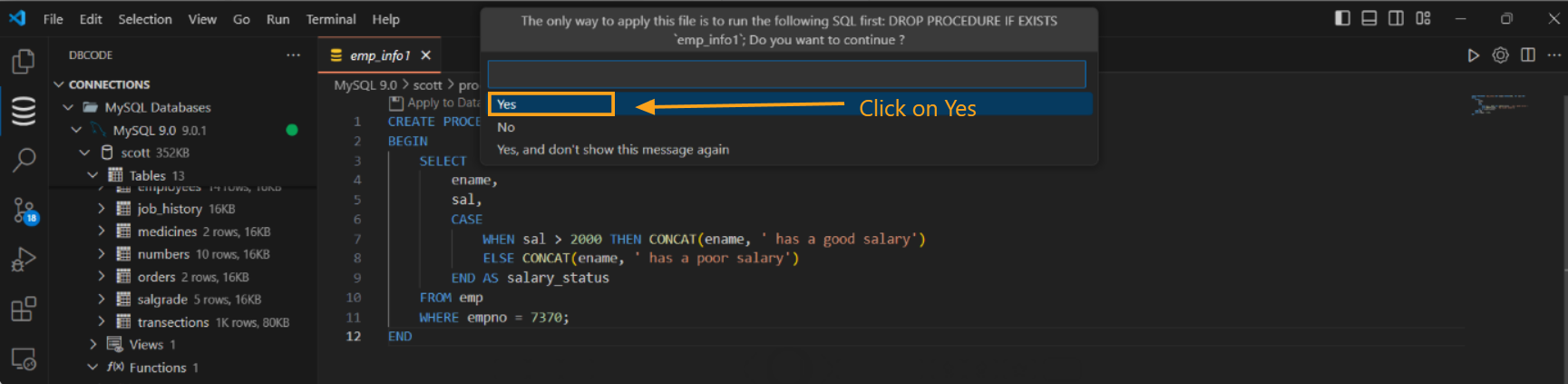
- A prompt will appear, asking if you want to proceed. Click Yes to confirm.
- A success message will display in the DBCode terminal, confirming the update.
Conflict Detection and Version Comparison
Section titled “Conflict Detection and Version Comparison”DBCode helps ensure database consistency by detecting conflicts and offering comparison tools when discrepancies arise.
Conflict Detection
Section titled “Conflict Detection”-
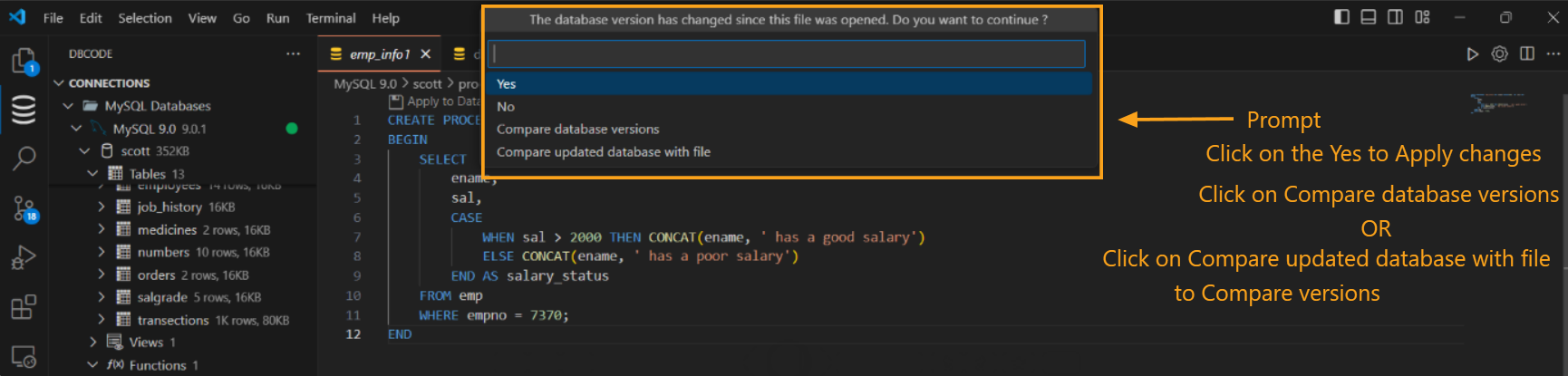
If the stored procedure in the database has been modified since it was opened in the editor, DBCode will detect the change when you try to apply updates.
-
A conflict prompt will appear with the following options:
- Yes: Overwrite the database version with the editor version.
- No: Cancel the operation.
- Compare database versions: View differences between the database’s original and updated versions.
- Compare updated database with file: Compare the updated database version with the version in your editor.
Compare Changes
Section titled “Compare Changes”-
Compare database versions:
View a side-by-side comparison of the original and updated database versions, with highlighted differences.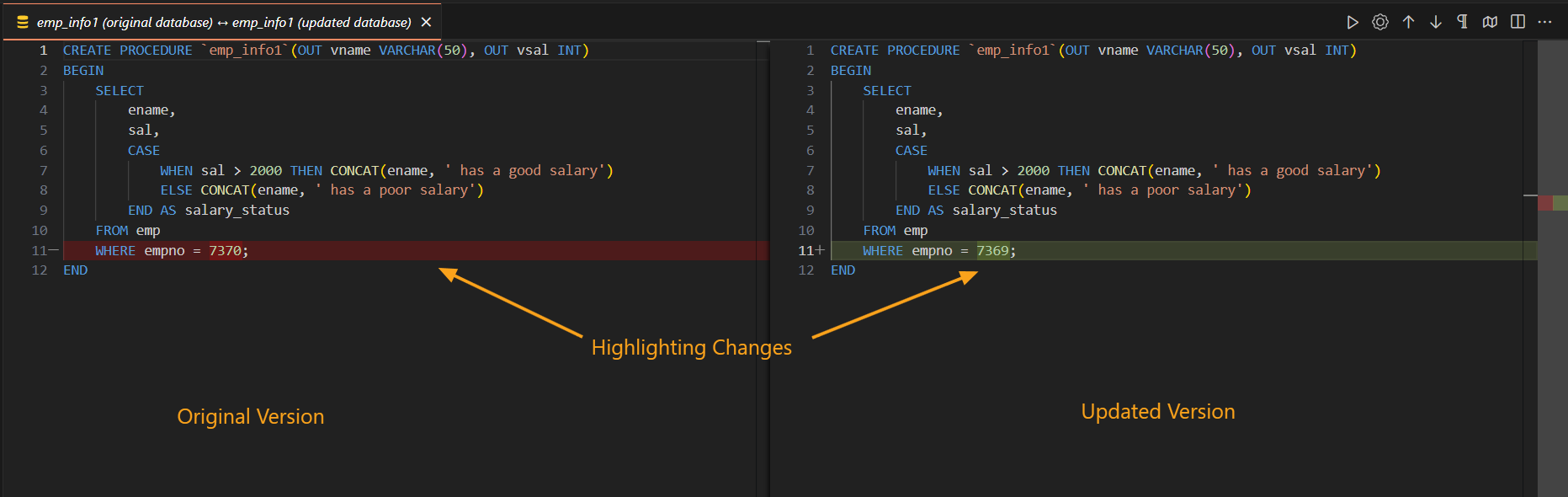
-
Compare updated database with file:
View a comparison of the updated database version and your local file, showing all changes.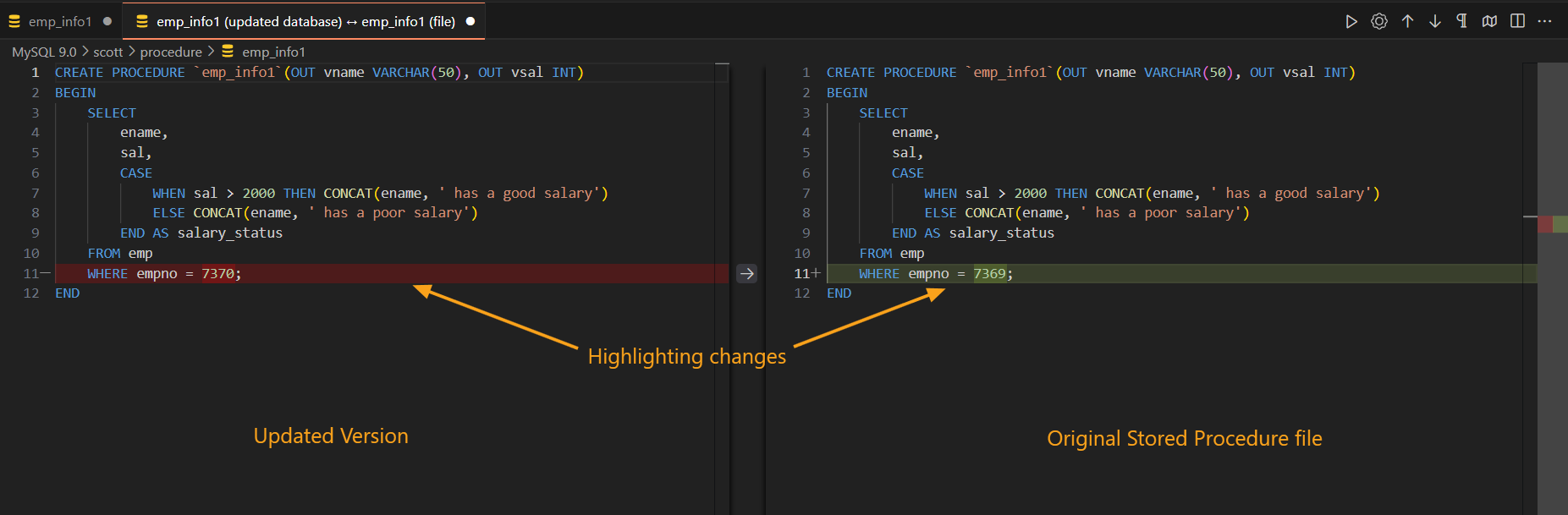
Why Use Stored Procedures in DBCode?
Section titled “Why Use Stored Procedures in DBCode?”- Reusability: Simplifies recurring tasks by encapsulating SQL logic in reusable procedures.
- Efficiency: Precompiled procedures enhance database performance.
- Conflict Detection: Prevents overwriting newer database versions with outdated scripts.
- Integrated Workflow: Combines creation, execution, modification, and debugging into a single interface within Visual Studio Code.
DBCode ensures seamless and error-free management of stored procedures, empowering you to maintain database consistency and optimize SQL workflows effortlessly.